Zum Inhalt springenContact
Sustainability you can feel

Sustainability
you can feel

Felix Schoeller turns decorative paper into a statement – and sustainability into a design argument.

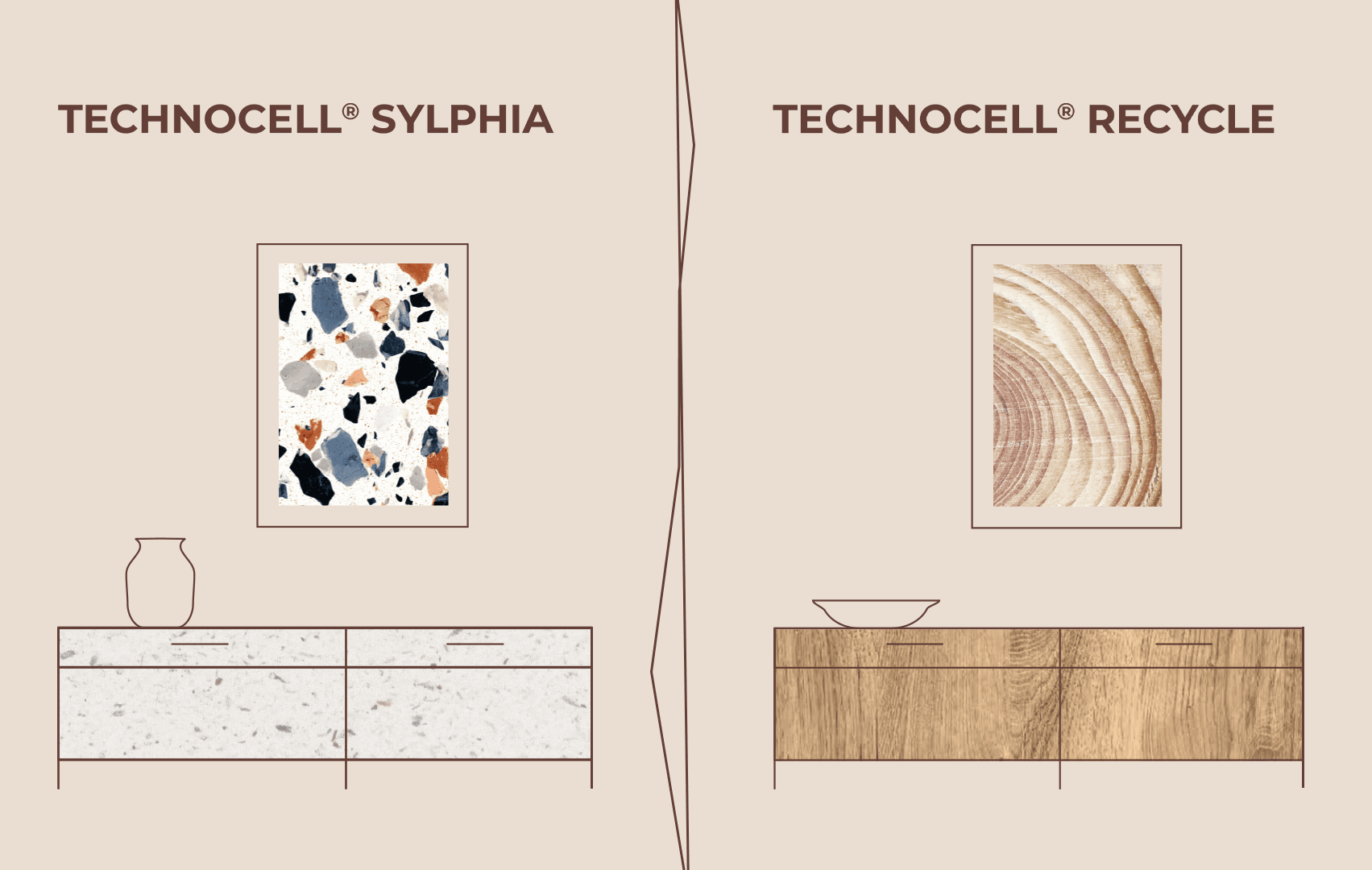
Split illustration comparing two decorative papers: on the left, TECHNOCELL Sylphia, shown as a terrazzo-pattern picture above a sideboard with a light surface speckled with visible plant fibres; on the right, TECHNOCELL Recycle, shown as a picture of wood grain above a sideboard with a calm, warm oak finish.

Brand challenge

Sustainability shouldn't look like compromise.

Felix Schoeller is a family-run specialty paper manufacturer based in Osnabrück with around 3,700 employees. In the field of decorative paper, it is one of Europe's leading suppliers.

Furniture and panel manufacturers need resource-efficient materials. At the same time, they expect surfaces that are as expressive as ever. Responsibility and design are seen as opposites. Those who sell decorative paper usually sell rolls, weights and certificates.

The question is: How does a raw material become a stance that people can feel in a space?
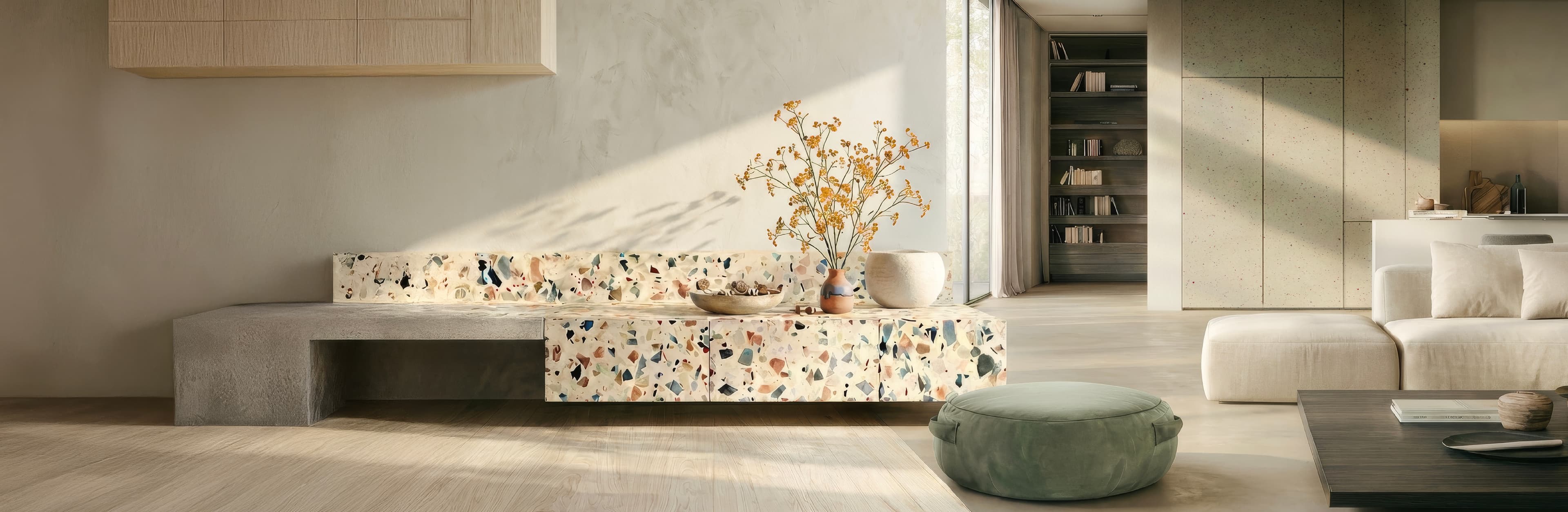
Bright, minimalist living room with a floating sideboard in a colourful terrazzo decor, topped with a bowl, a vase of yellow flowers and a light ceramic pot, set against a plastered wall in warm daylight, with a green floor cushion and a cream sofa in the foreground.
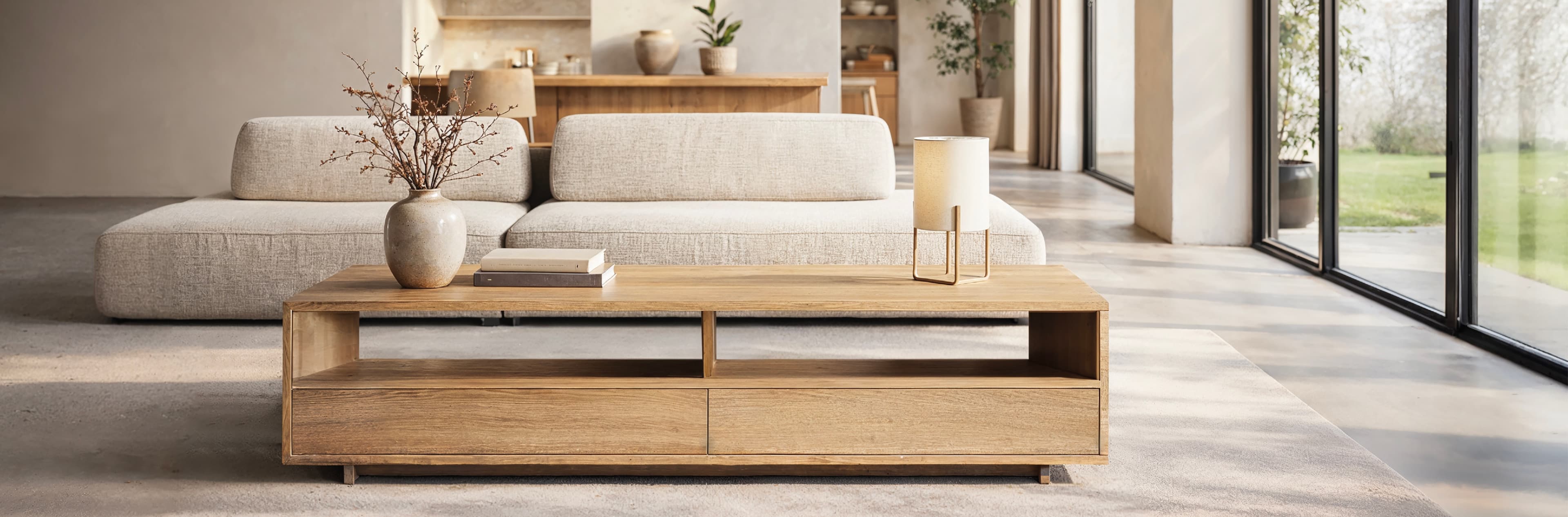
Bright, open-plan living room with a low oak-decor coffee table with two drawers, topped with a ceramic vase of dried branches, two books and a small table lamp, in front of a light bouclé sofa, with floor-to-ceiling windows and a garden in the background.

Brand idea

What a surface radiates begins in the decorative paper.

What people experience first in a space is the impact of the surface. That is why Felix Schoeller thinks not in rolls, but in surfaces. Future Surfaces are surfaces that people want to live with, that industry can produce reliably, and that the planet can afford.

The aspiration: desirable, feasible, sustainable. Two papers translate it.

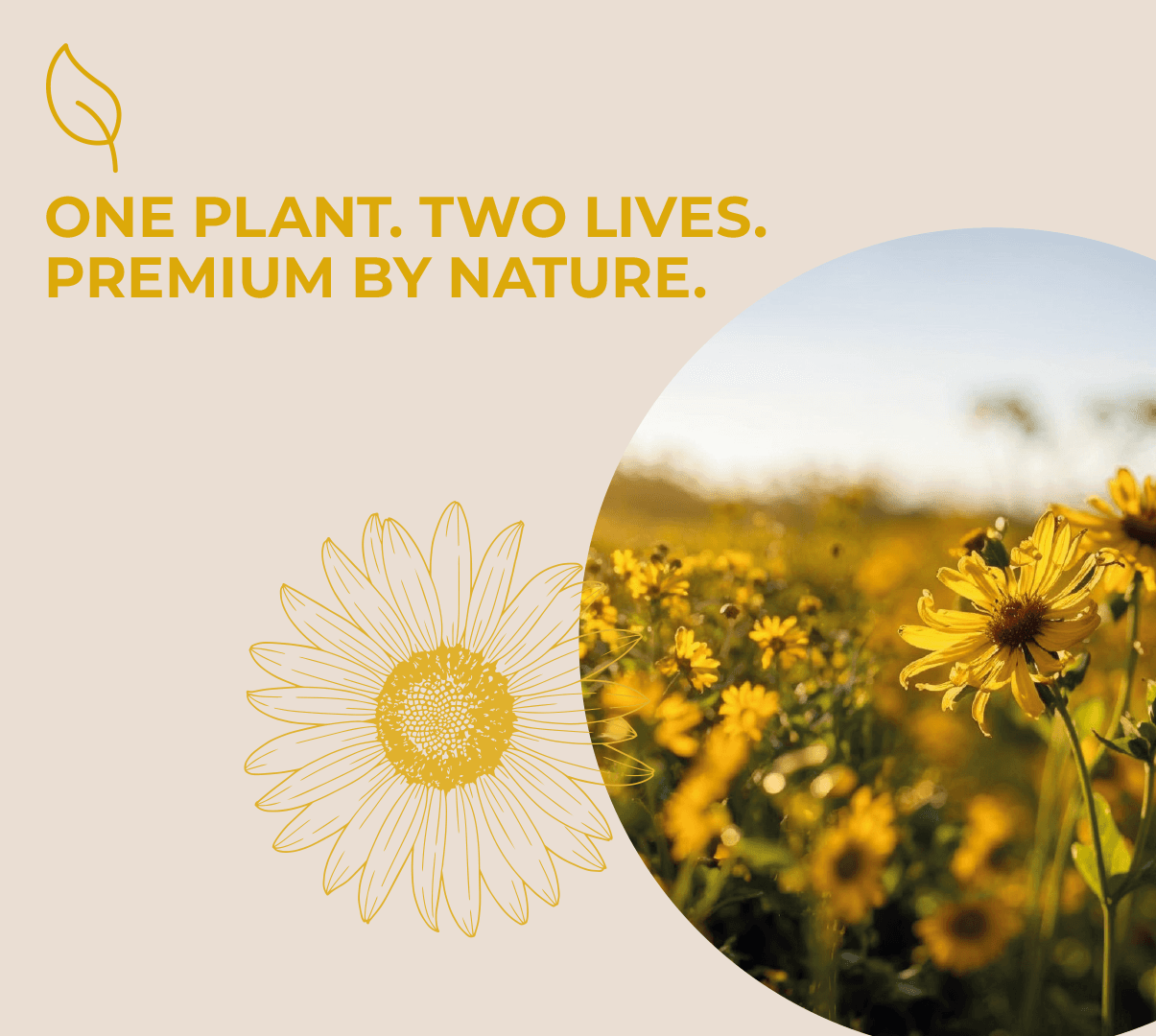
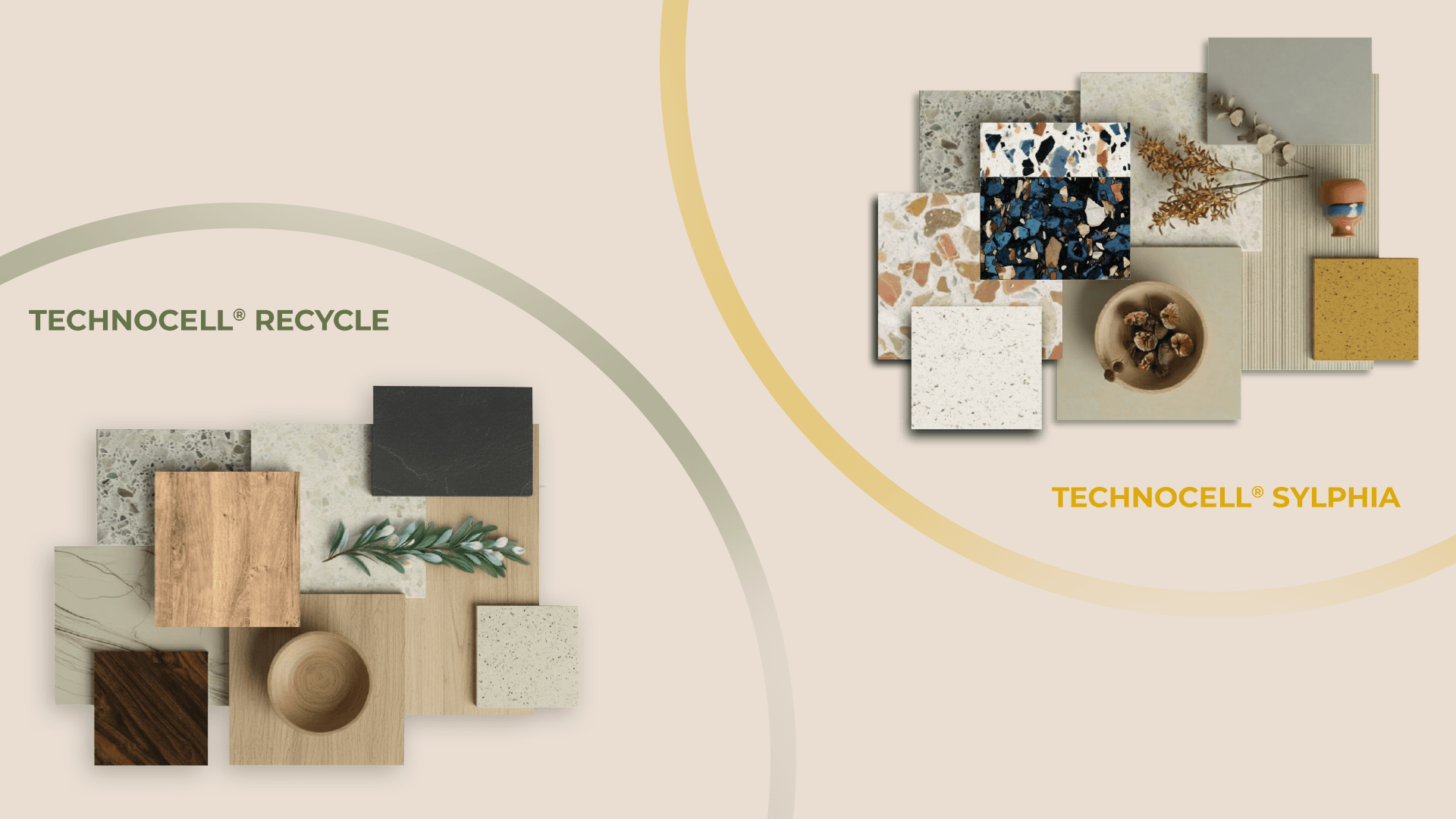
TECHNOCELL Recycle makes responsibility invisible: 30 percent recycled fibres, homogeneous across the surface, clear for classics and solid colours. TECHNOCELL Sylphia makes it visible: fibres of the silphium, an energy crop with a second life, remain deliberately recognisable and give every surface character.

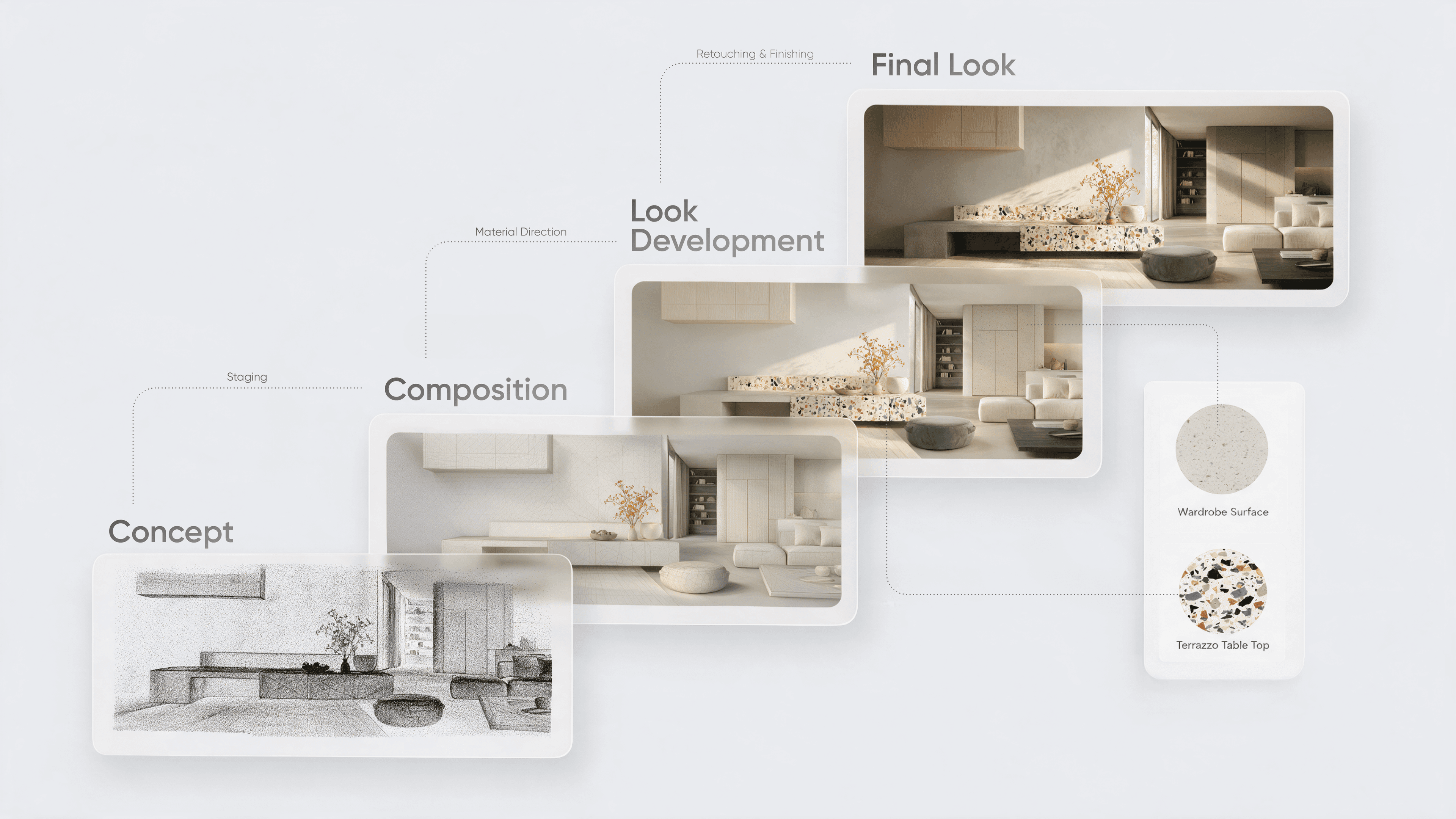
Four-step process graphic showing how an interior visual is developed: Concept (staging) as a pencil-style sketch of a living room, Composition as a light, colourless 3D render, Look Development (material direction) with a terrazzo sideboard added, and Final Look (retouching and finishing) as the finished, sunlit scene. Two material swatches, "Wardrobe Surface" in light speckled grey and "Terrazzo Table Top" in colourful terrazzo, are linked to the look development step.
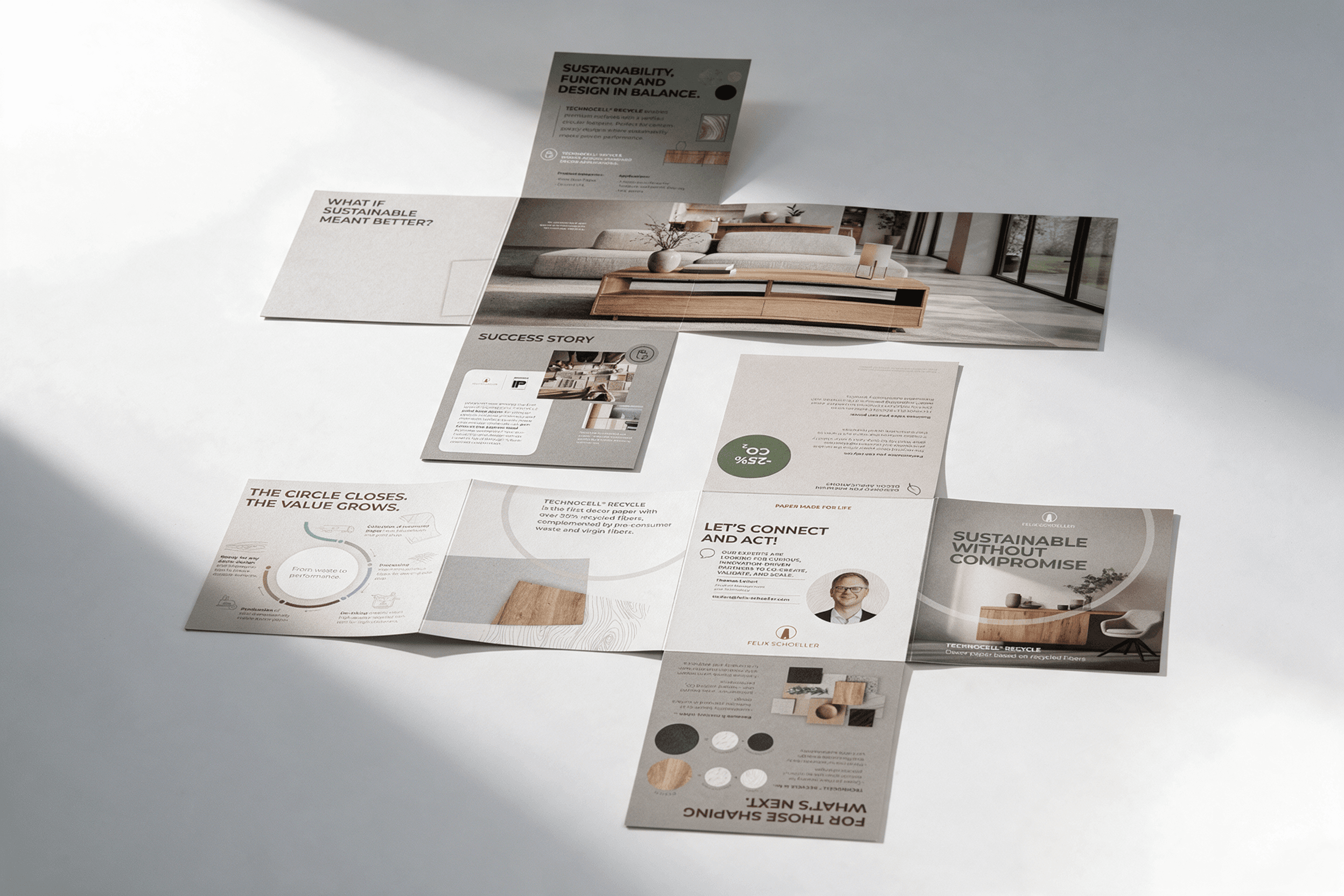
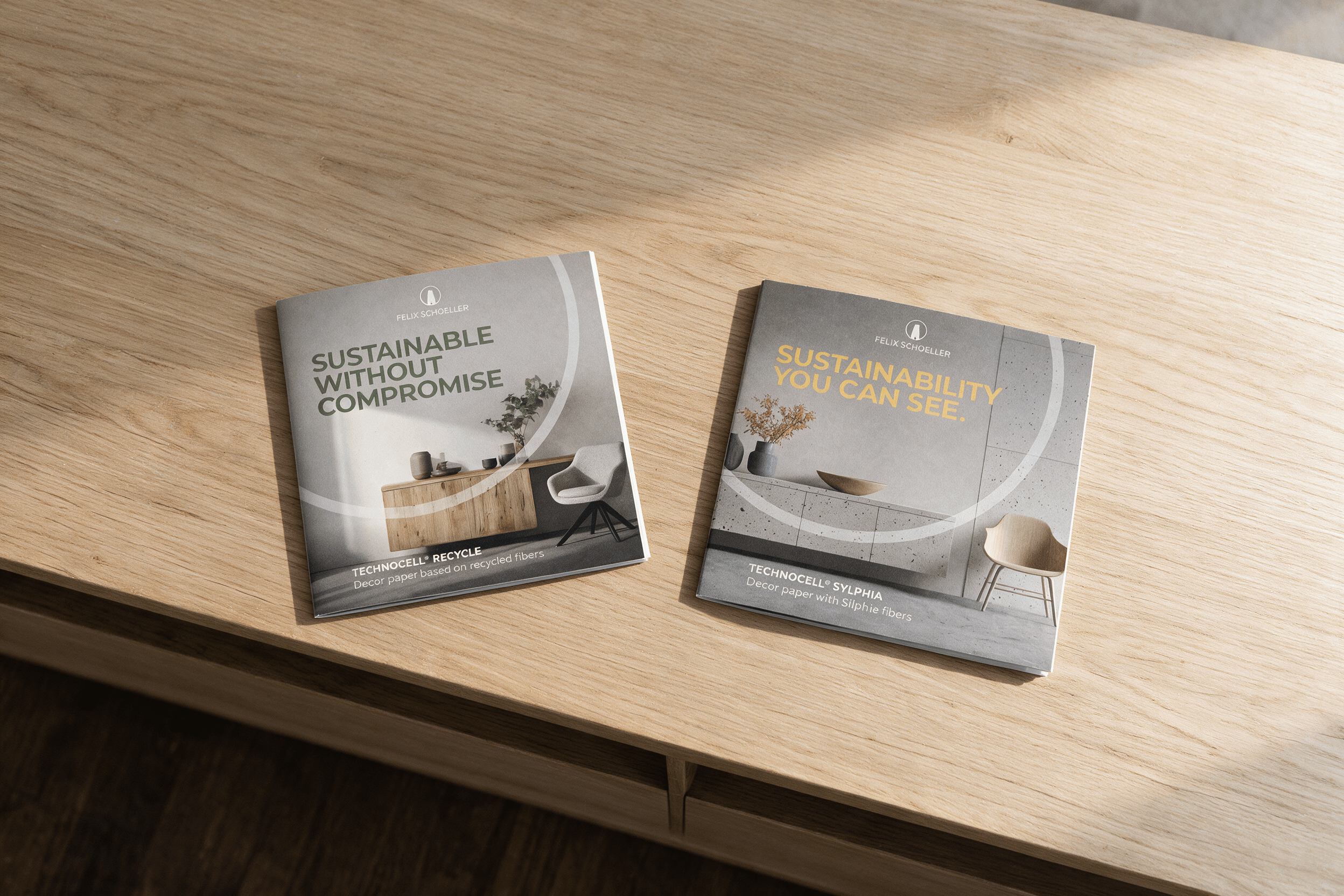
Felix Schoeller brochure for TECHNOCELL Recycle, fully unfolded on a light surface in soft shadow. The panels show the headings "Sustainable without compromise", "What if sustainable meant better?", "Sustainability, function and design in balance", "The circle closes. The value grows.", "Success story", "Let's connect and act!" and "For those shaping what's next". They include a living room with an oak-decor coffee table, a circular value-chain diagram, material swatches, a "-25% CO₂" badge and a contact portrait.

Result & impact

Two papers, one promise: responsibility that can be designed.

Sustainability is shifting from a compliance topic to a design decision. Decor manufacturers choose whether responsibility is seen or felt. Schattdecor is already using Sylphia in its terrazzo decor Arezzo. And Felix Schoeller no longer talks about paper, but about the spaces of tomorrow.

  • Corporate Communication
  • Flyer
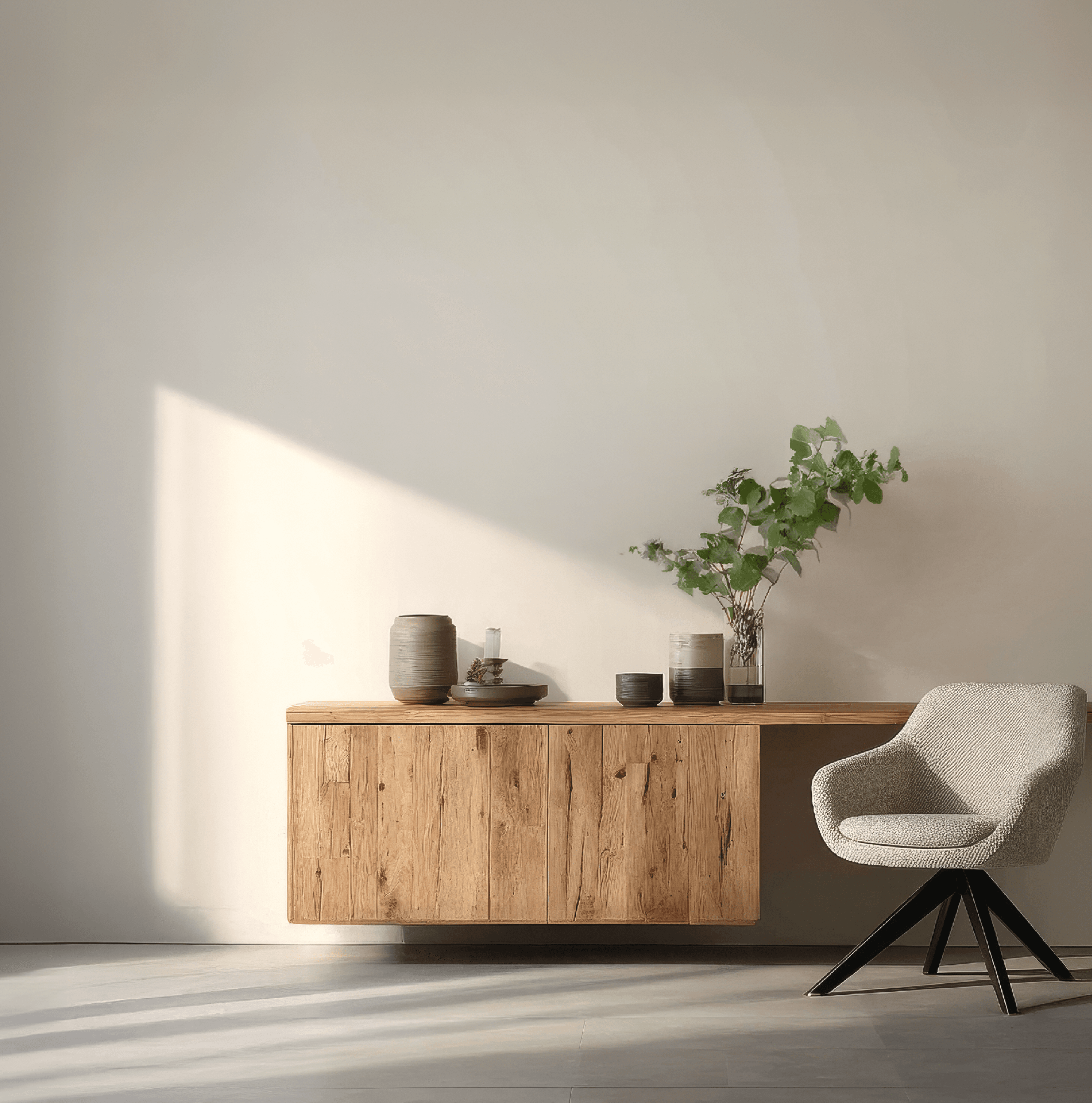
Minimalist interior with a wall-mounted sideboard in a warm, rustic wood decor with visible grain and knots, topped with grey ceramic vessels, a glass vase of green leafy branches and a small candle holder. A light bouclé armchair with black legs stands to the right, against a plain cream wall with a patch of soft sunlight.AI-generated
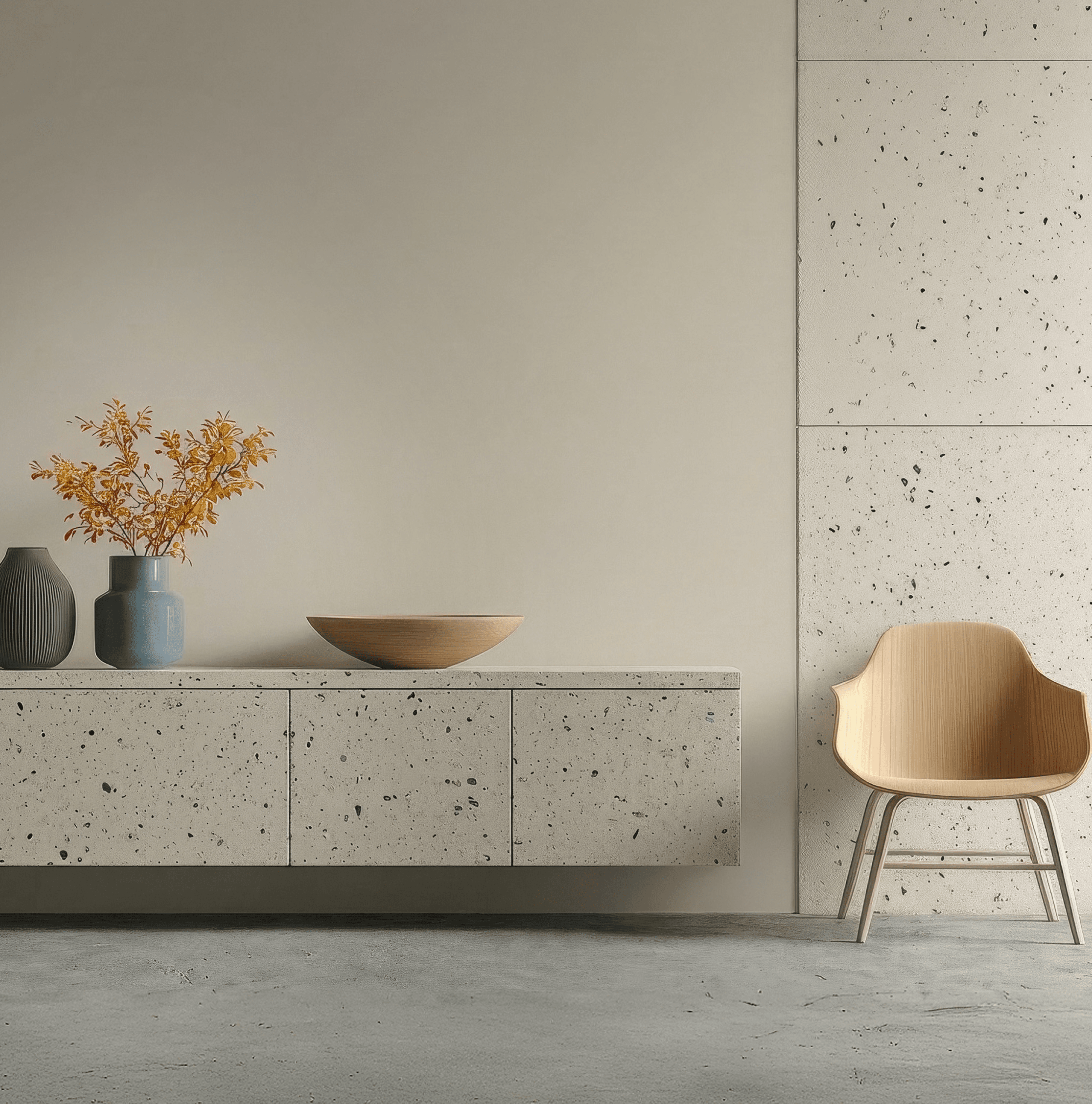
Minimalist interior with a wall-mounted sideboard and a matching wall panel in a light, speckled stone-like decor with dark flecks. On the sideboard stand a ribbed dark vase, a blue ceramic vase with orange autumn branches and a shallow wooden bowl. To the right, a light wooden shell chair stands in front of the panel, on a grey concrete-look floor.AI-generated
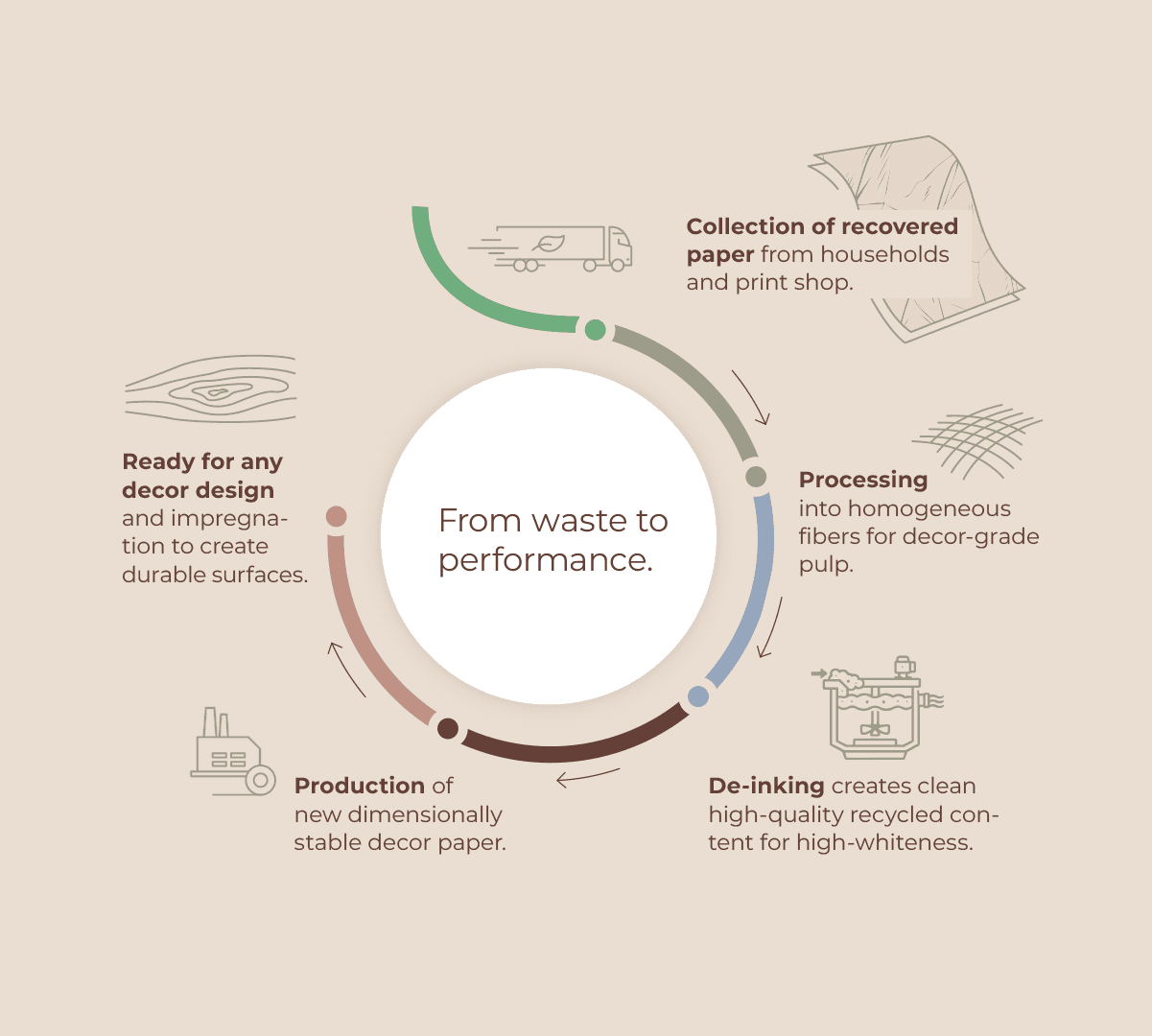
Circular process diagram titled "From waste to performance." in five steps: collection of recovered paper from households and print shops, processing into homogeneous fibres for decor-grade pulp, de-inking for clean, high-quality recycled content with high whiteness, production of new dimensionally stable decor paper, and finally decor paper ready for any decor design and impregnation to create durable surfaces. Each step has a line icon, such as a truck, a fibre mesh, a mixing tank, a paper machine and a wood grain.
Graphic with the headline "One plant. Two lives. Premium by nature." in yellow capitals. A circular photo on the right shows a field of yellow silphium flowers in warm evening light under a pale sky. A yellow line drawing of a flower overlaps the photo's edge, and a small leaf icon sits at the top left.
Two material moodboards on a beige background, each framed by a curved line. On the left, labelled "TECHNOCELL Recycle", a flat-lay of calm decor swatches in oak and walnut wood, light stone, dark slate and fine speckled surfaces, with a green olive branch and a wooden bowl. On the right, labelled "TECHNOCELL Sylphia", a flat-lay of expressive swatches in colourful blue, orange and black terrazzo, a light speckled surface, a mustard-yellow swatch and a ribbed grey panel, with dried branches, a small ceramic vase and a bowl of figs.

Key facts

More than 30% recycled fibres

Up to 25% CO₂ reduction

Made in Germany: reliable supply

Contact

Sustainability: quiet or loud?
Let's talk about how it shows in your design.

Key takeaways

  • Sustainability is a design choice.

  • Deliberately showcasing natural character

  • Freedom of choice beats the message of sacrifice

Sabine KropfManaging Director

Sabine Kropf
Maximilian Kratzer

Maximilian KratzerHead of Growth